
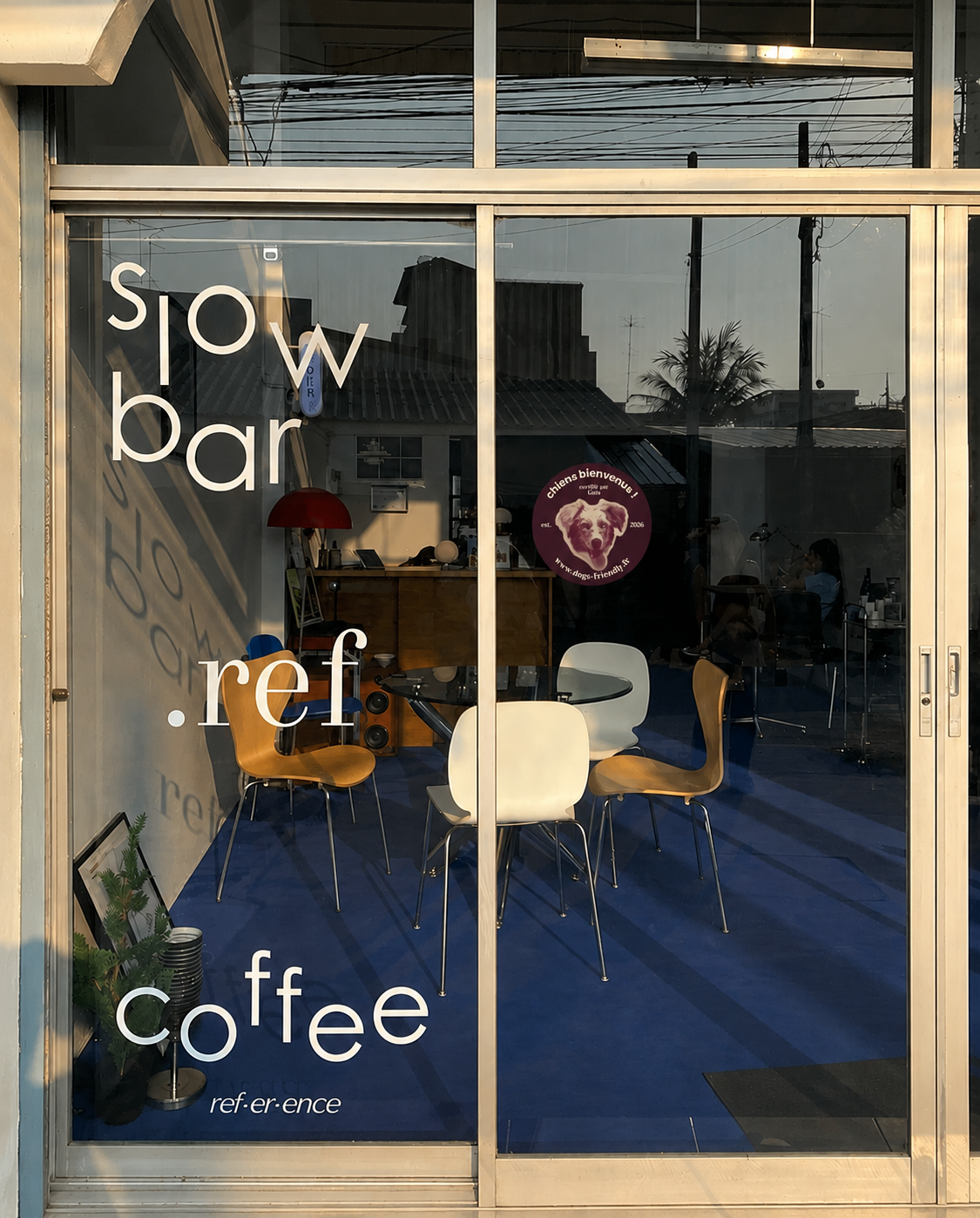
Accepting dogs without saying so is like opening without a sign. A dog owner does not push a random door: they check before heading out, on Google, in a directory, in a local group, or they spot a sign in the window. If you appear in none of these places, you are invisible to that audience.
Here are the five touchpoints to cover, from the quickest to the most structural.
- Your Google listing: the first search reflex
That is where local SEO plays out. When someone types "restaurant dogs allowed" or "dog friendly café + city", Google draws from business listings.
The official attribute
Google offers a dedicated attribute: "Pets allowed" (or "Dogs allowed" depending on your establishment''s category). It is ticked in your listing, under Information, in the Options or Accessibility and amenities section depending on the interface.
It is the only information Google uses in a structured way to filter results. Without it, you do not come up in filtered searches, even if you have been accepting dogs for ten years.
The description
The attribute alone is not enough. Add the mention in plain words in your listing''s description, with your actual conditions:
"Our four-legged friends are welcome indoors and on the terrace, with a water bowl available."
This sentence is read by Google, but also by answer engines like ChatGPT or Perplexity, which increasingly rely on the text of listings and websites to recommend addresses.
Photos
Publish at least one photo showing a dog in your establishment, or the water bowl placed near the entrance. It is an immediate signal, understood without reading.
Posts
A Google post every few weeks mentioning that you welcome dogs keeps the signal alive and feeds the freshness of your listing.
- The window sticker: capturing those who walk past
The Google listing captures those who search. The sticker captures those who walk past.
That is an important difference. A walker with their dog is not searching: they are walking. If they see a clear sign on your window, they come in. If they see nothing, they keep walking, because asking and being refused in front of people is an experience most owners avoid.
A good sticker meets three criteria:
- Legible from the pavement, at three or four metres.
- Recognisable, meaning tied to a network owners identify, not an isolated visual.
- Durable, in laminated vinyl that withstands UV and rain without yellowing in six months.
Position it at eye level, on the front door or on the window next to the handle. Not at the top of the shop window, where no one looks.
- Dog-friendly directories: being found before the outing
A growing share of owners plan ahead. They look for an address for the weekend, for a trip, for a family outing. They then use specialist maps and directories rather than Google, because the information is reliable and already filtered.
A listing in a dog-friendly directory brings you three things:
- Targeted visibility to an audience with a single search criterion.
- An inbound link to your website, which strengthens your overall organic SEO.
- A listing that ranks in searches where your own website has no chance of appearing.
That is the principle behind the dogs-friendly.fr map: owners open the map, filter by city and shop type, and see the listed establishments around them.
- Your website: saying it clearly, in writing
If you have a website, create a dedicated section, even a short one. Three lines are enough, but they need to be precise.
What works:
- A clear sentence high up on the page or in the footer: "Dog-friendly establishment."
- Your exact conditions: dining room, terrace, hours, water bowl.
- A question and answer in your FAQ, phrased the way a customer would ask it: "Can I come with my dog?"
That last point matters more and more. The AI models that answer internet users'' questions rely on explicit question-answer formulations. Writing the question the way it is actually asked increases your chances of being cited in the answer.
A clickable badge linking to your directory listing, in the footer, completes the setup and creates a cross-link.
- Reviews and local word of mouth
That is the most powerful lever and the least controllable. Might as well help it along.
Ask for the review at the right moment. When a customer leaves happy with their dog, that is the moment. A simple "if you have two minutes, a review helps us a lot, and feel free to mention that we welcome dogs" works better than a QR code on the table.
Reply to reviews that mention dogs. A reply that picks up the keyword ("thank you, we''re delighted your dog felt at ease") strengthens the association between your establishment and that search.
Identify local groups. Almost every city has a Facebook group for dog owners. A post announcing that you welcome dogs, with a photo of the water bowl and your hours, often generates more traffic there than a paid campaign.
Take photos and post. Your customers'' dogs, with their permission, are the best social media content you can produce. Unbeatable engagement rate, zero cost.
The order to move in
If you can only do three things, in this order:
- Tick the attribute on your Google listing and add the mention in the description. Ten minutes, free, immediate effect on searches.
- Put up a window sticker. Captures the passers-by, who are your daily volume.
- Sign up on a dog-friendly map. Captures those who plan ahead and brings you an inbound link.
The rest is built over time, review after review.
Costly mistakes
Staying vague. "We may accept dogs depending on how busy we are" reassures no one and gets listed nowhere. A clear rule, even a restrictive one, beats a fuzzy one.
Only signalling inside. A sign on the counter is only seen by those already inside. The information has to live outside.
Forgetting the terrace. If you only accept dogs on the terrace, say so. It is useful information, not an admission of weakness.
Not briefing the team. Nothing damages your reputation more than a customer who read "dog-friendly" online and gets turned away at the door by a badly briefed waiter.
Frequently asked questions
How do I show that my business welcomes dogs on Google? In your Google business listing, activate the "Pets allowed" attribute and add the mention in plain words in the description. Round it off with a photo showing a dog or a water bowl.
How much does listing on a dog-friendly directory cost? It depends on the platform. On dogs-friendly.fr, the map listing is included in an annual subscription that also covers the window sticker and its delivery.
Does the window sticker really do anything? Yes, because it reaches an audience that online SEO does not: passers-by. An owner walking their dog is not searching on Google, they look at shop windows.
Do you need a website to be listed as a dog-friendly business? No. A well-filled Google listing and a presence on a specialist directory are enough. The website is a plus, not a prerequisite.
How long before you see results? The Google attribute produces an effect within a few days. The sticker acts immediately on passers-by. Word of mouth and reviews build over two to three months.
Do you want to appear on the map consulted by dog owners in your area? Join www.dogs-friendly.fr/commercants, window sticker included.