
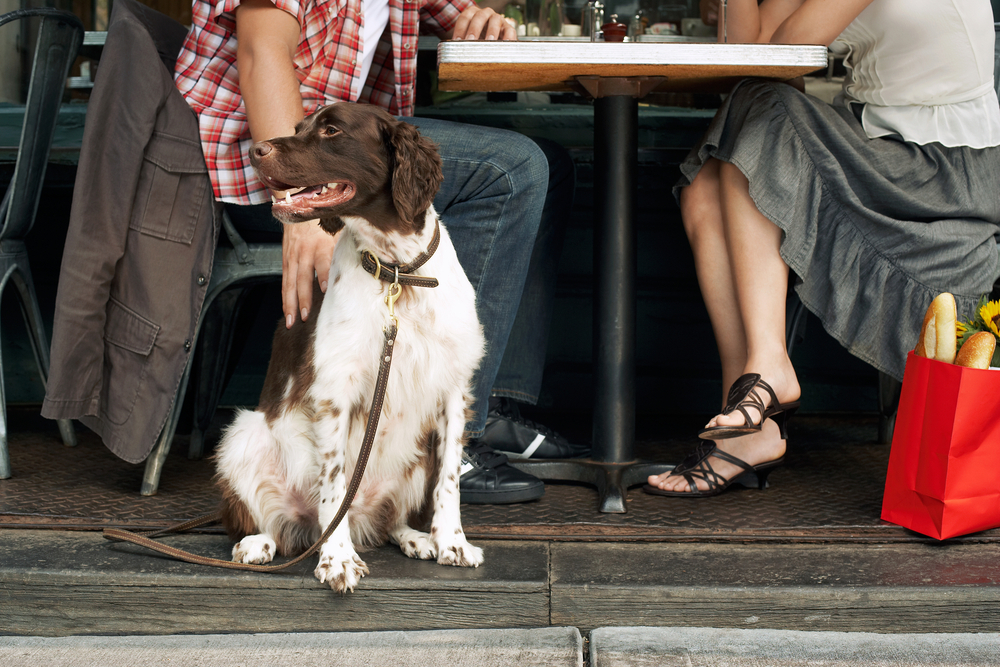
Becoming a dog-friendly business is not just about "accepting" dogs. It is about deciding your rules, kitting out your establishment with the bare minimum, aligning your team and letting the outside world know. Count on half a day of preparation and less than 50 euros of equipment.
France counts around 9.7 million dogs, present in almost one in three households according to the FACCO barometer. These owners organise a large share of their outings around one question: can I bring my dog? Answering it clearly is how you capture a customer base that, once they have found their place, keeps coming back and talks about it.
Here is the method, step by step.
Step 1: check that your setup allows it
Before anything else, one regulatory point to settle in two minutes.
No French law prohibits dogs in a restaurant, café, hotel or shop. The only limit is health-related: animals must not access areas where food is handled or displayed uncovered.
- Closed kitchen or kitchen separated by a pass: you can welcome dogs indoors.
- Kitchen entirely open to the dining room, without separation: the dining room is considered a handling area, animals are prohibited there. The terrace remains possible.
- Food shop with uncovered products (bakery, butcher, cheese shop): welcoming dogs indoors is not possible, but an outside water point and a tie-up ring are still much appreciated.
The detail of the texts is developed in our article on what the law says about dogs in shops.
Step 2: define your rules before communicating
The most common mistake: announcing "we accept dogs" without having decided how far. The result: each team member improvises and customers get different answers.
Settle these six points and write them down:
- Where? Terrace only, or dining room and terrace.
- When? All the time, or outside the lunchtime rush.
- How many? One dog per table, two, no limit.
- How? Short lead compulsory, dog lying on the floor, never on the furniture.
- Where exactly in the dining room? Set aside the least busy tables, along a bench or near a window. The dog is calmer, other customers less disturbed.
- What is the limit? A dog that barks repeatedly or growls: you ask the owner to step out. This is non-negotiable and it protects your dining room.
A single A4 page pinned in the back office is enough. It is your shared reference.
Step 3: kit yourself out for under 50 euros
Welcoming dogs requires no heavy investment. The useful equipment fits on a short list:
- A clean water bowl, filled and changed regularly. This is the number one gesture, the one that gets photographed and cited in reviews. In stainless steel, it cleans up easily and does not tip over.
- A washable mat or blanket to offer under the table. The dog settles on it, stays in one spot, and your floors are not disrupted.
- A tie-up ring or hook on the front, for setups where the dog cannot come in.
- A quick-clean point: absorbent paper, disinfectant spray, bags. Kept within reach, not at the back of the storeroom.
- Neutral treats, in a closed jar, to be given only with the owner''s consent. Some dogs are on a strict diet or have allergies.
The rest is optional: raised bowl, small bed near the entrance, bag dispenser. Useful, never essential.
Step 4: brief the team
A successful dog-friendly welcome plays out in the first ten seconds.
What the team needs to know how to do:
- Greet the dog at the same time as the customer. "Hello, is it two or three of you with the little one?" defuses all the owner''s awkwardness.
- Offer water spontaneously, without waiting for the request.
- Guide them to the right table, the one you identified in step 2.
- Never stroke a dog without asking. Some dogs are reactive, fearful or in training.
- Never give anything to eat without the owner''s consent.
- Know how to say no calmly if another customer expresses genuine discomfort or in case of a phobia or allergy. The formula that works: offer a table move, never a judgement.
This briefing takes ten minutes in a team meeting. It is the most profitable part of the process.
Step 5: anticipate objections from your other customers
Two concerns come up: hygiene and people with allergies or fears.
The answer lies in how you organise the room. By setting aside a zone for customers with dogs, keeping the central tables free and reinforcing floor cleaning at the end of service, you handle 90% of cases. For the remaining 10%, a table move offered with a smile is enough.
On the liability side, you are covered: article 1243 of the French Civil Code places responsibility for damage caused by an animal on its owner, covered by their civil liability insurance.
Step 6: signal outside, not just inside
This is the step almost everyone neglects, and it is the one that pays off.
A dog owner walking down a street does not push a door "just in case". They have already lived through refusal, often in front of people. So they walk on, or they go home.
To capture this customer, the information must be visible before the entrance:
- A window sticker, legible from the pavement. It is the most effective signal because it is seen by passers-by who were not looking for you.
- A mention on the Google listing, in the attributes and in the description.
- A line on your website, with your exact conditions.
- A presence in a dog-friendly directory, to be found by those who search before heading out.
We cover this part in the article on how to list your dog-friendly business.
Step 7: measure, adjust
After a month, ask your team three questions:
- Roughly how many customers with a dog per week?
- Was there any incident, and what was it?
- Is any rule too strict or too fuzzy?
Many shopkeepers start with the terrace only, then open the dining room after a few weeks when they see that dogs sleep under the tables without anyone noticing.
What it actually brings you
A dog-friendly business wins on three fronts.
Off-peak footfall. Dog walkers head out mid-morning, mid-afternoon and at the end of the day. Exactly the hours when dining rooms are empty.
Loyalty. An owner who has found a place where their dog is well welcomed comes back, often at the same time, often with the same people.
Word of mouth. That is the real lever. Dog-owner communities are extremely active in local groups and on social media. A good experience gets shared fast, and a water bowl placed spontaneously gets talked about.
Frequently asked questions
Do you need an authorisation to accept dogs in your business? No. No administrative step, no approval and no specific insurance are required. It is enough to protect the food-handling areas.
How much does kitting out a dog-friendly business cost? Less than 50 euros for the essentials: a stainless steel bowl, a washable mat, a tie-up hook and cleaning supplies. The rest is comfort.
Can you accept dogs on the terrace only? Yes, and it is often the right way to start. You test without changing how your dining room is organised, then broaden if the experience is conclusive.
What do you do if a customer complains about a dog being there? Offer a table move without commenting. In the vast majority of cases, the discomfort comes from immediate proximity, not from the dog''s presence in the room.
Can a dog stay in a restaurant for the whole service? Yes, if it is calm, kept on a short lead and lying on the floor. It is the behaviour, not the duration, that causes a problem where applicable.
Your rules are set, your team is ready? All that is left is to make it known. Join the dogs-friendly.fr map and get your window sticker.